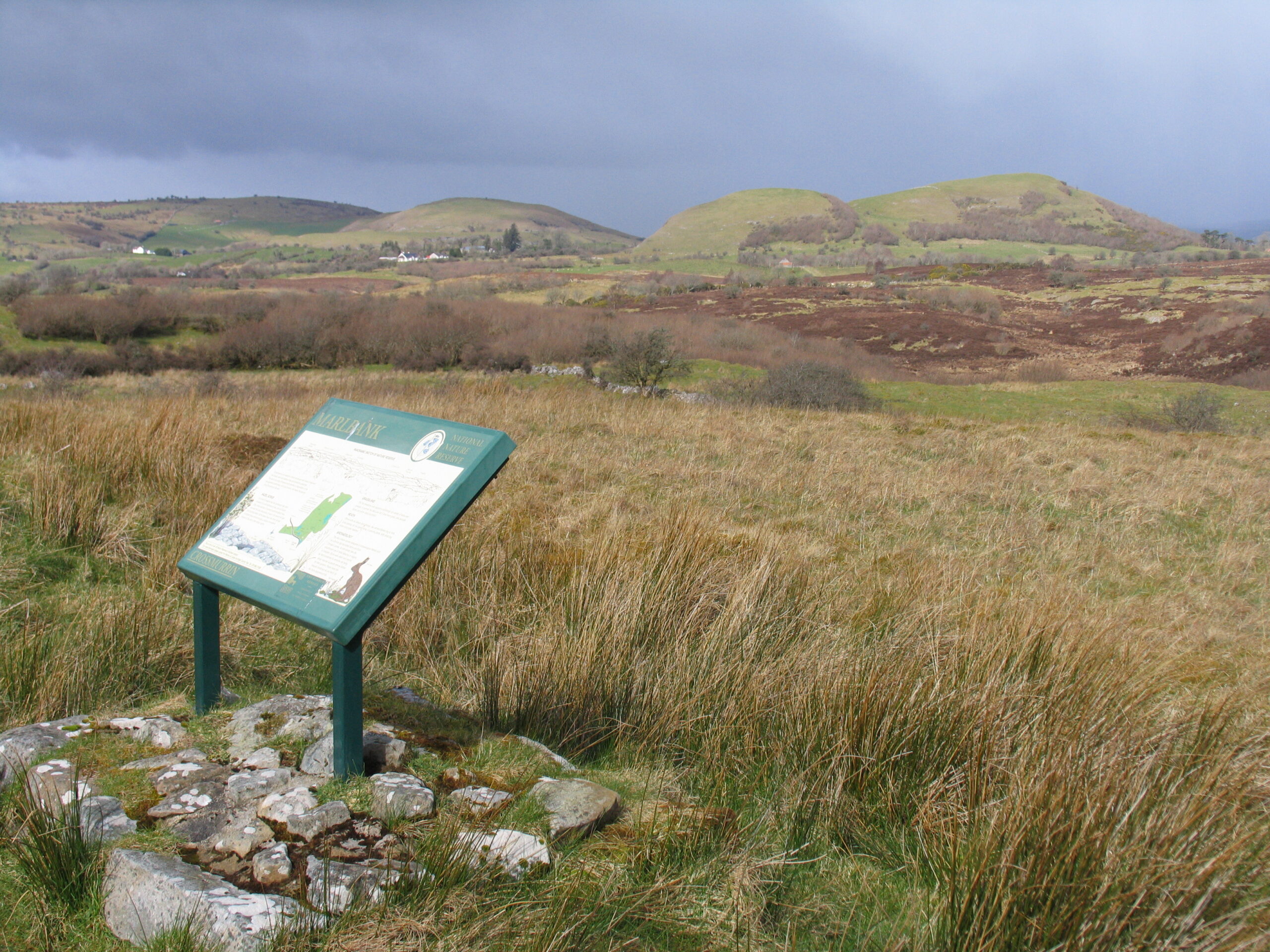
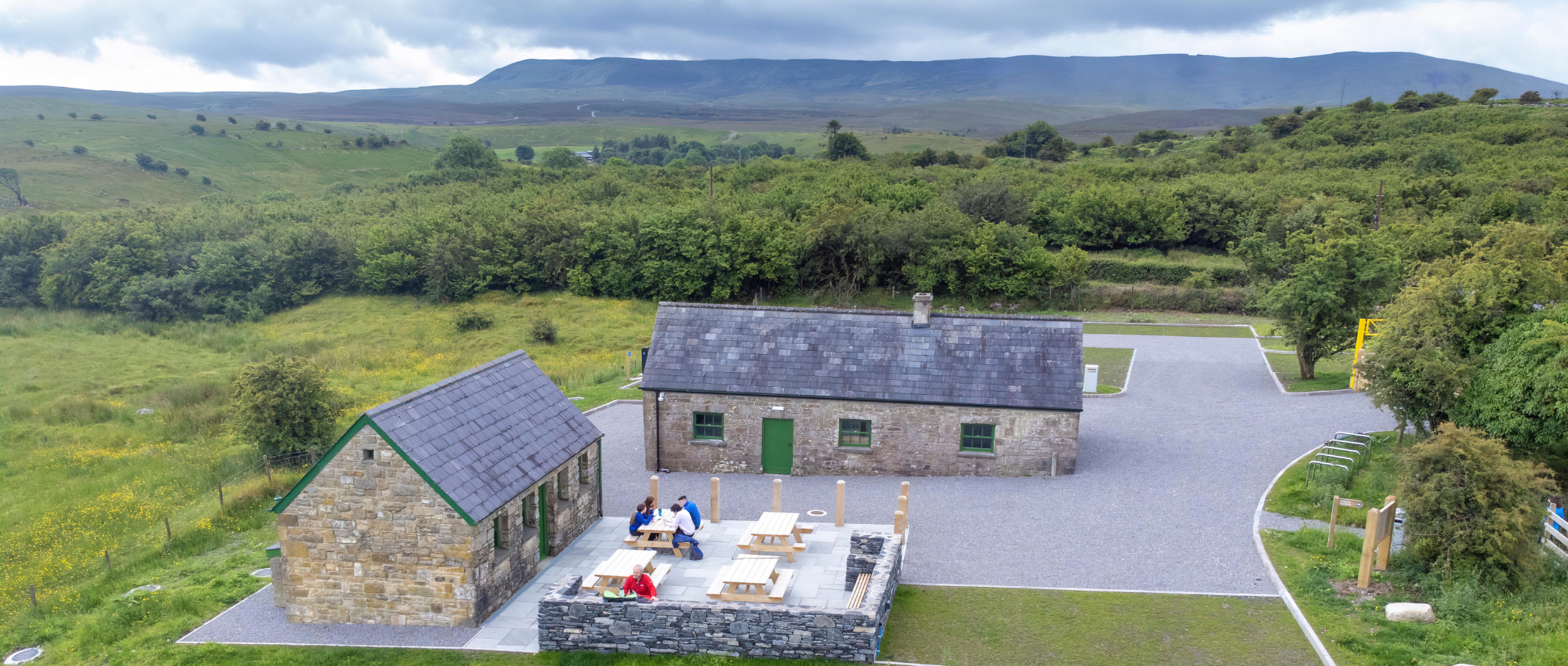
Nestled between Cuilcagh Mountain and the Erne Lowlands, Killykeeghan National Nature Reserve lies within one of Northern Ireland’s most extensive limestone areas, a landscape which has been shaped by both nature and time. At one time, this area was cloaked in Hazel, Elm, and Ash woodland. Since the Stone Age, clearances for farming have left only small patches of Hazel scrub, where today you can still find delicate woodland flowers like Wood-sorrel and Primroses. In spring, the haunting call of the Cuckoo echoes across the valley. As you wander the grasslands, Meadow pipits rise and fall in quick, fluttering flights. The thin soils over the limestone support a stunning variety of herbs and wildflowers. Grazing sheep and cattle help maintain this balance, allowing pink Thyme, blue Harebell, and yellow Common Bird’s-foot-trefoil to flourish — feeding butterflies such as the Common Blue and Peacock. In patches of heath, you’ll spot Cottongrass and yellow Bog Asphodel glowing among the Heather. Look closely and you may find signs of the Irish Hare or catch a glimpse of a Stoat darting along a dry stone wall. These traditional walls are a defining feature of the landscape, though many are now under threat as stones are collected for gardens. The reserve is also rich in history. Bronze Age artefacts, ancient stone cashels, and worked glacial erratics reveal traces of our prehistoric ancestors who once lived and farmed here. The on-site interpretation centre, a traditional cottage, has been beautifully restored to immerse visitors in the lives and heritage of the Marlbank people.
Killykeeghan National Nature Reserve
on the Grasslands Trail
An area of extensive limestone grasslands where you'll find delicate Thyme, Harebell and Devil's-bit Scabious.
Owner:
Northern Ireland Environment Agency
Access:
Publicly accessible year round
Size:
36.7 ha
Parking:
yes, free for coach and car and some E-charging points
Café:
no, but does have picnic area
Toilets:
yes
Description
Management
The lands are grazed with cattle and sheep by a local farmer for nature conservation purposes in an agreement with Northern Ireland Environment Agency.
Where to find out more
Marble Arch Caves